
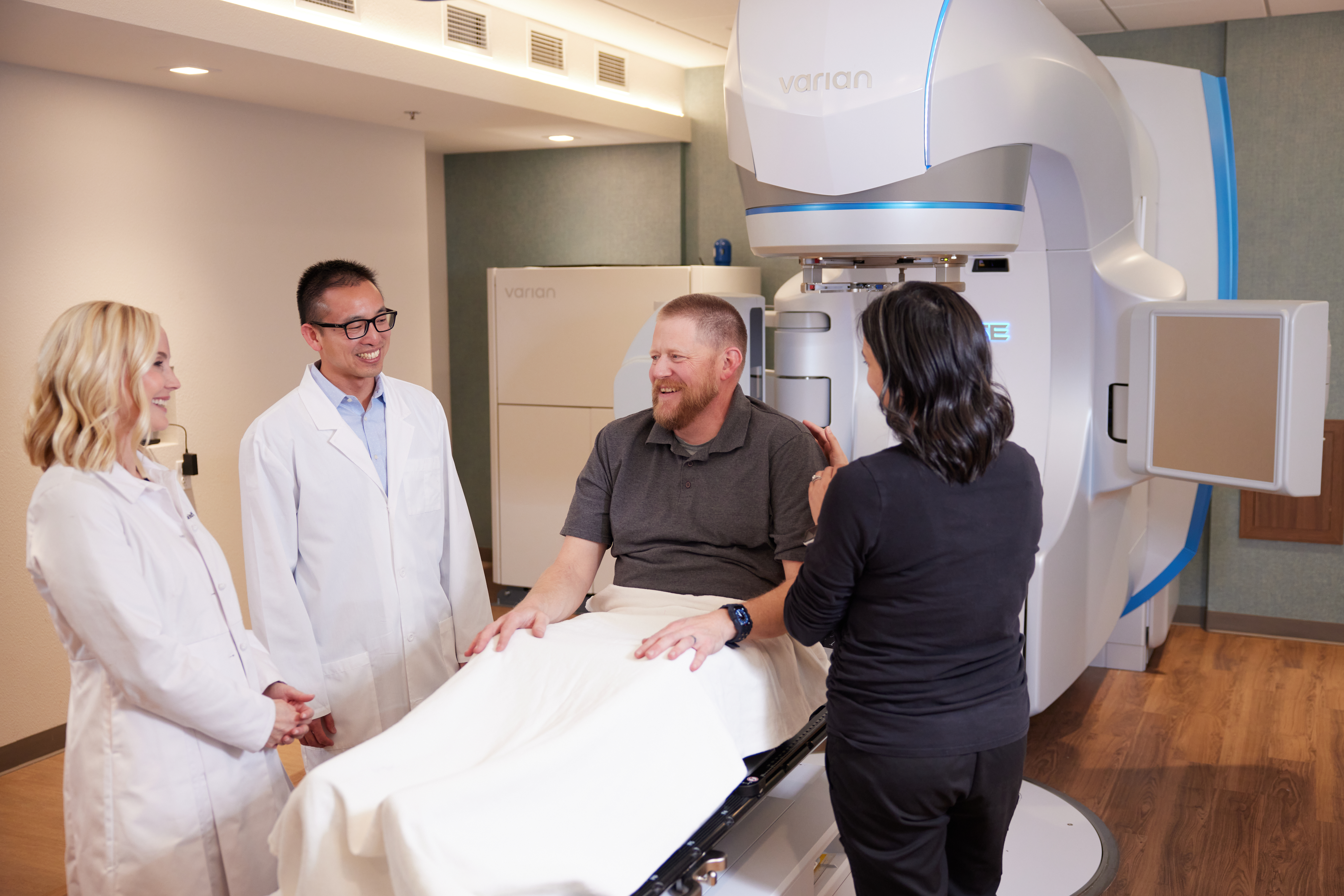
General advice
Patients undergoing radiation will see the doctor regularly at least once a week. However, any questions that come up can addressed right away if needed. Radiation side effects typically are related to the body site being treated. Some patients will experience fatigue during radiation. It may come and go, and patients usually feel better after taking a nap or going to bed early. The cause of this tiredness likely has many factors, but an interesting study in mice found radiation released opiate-like hormones, which may potentially be reversed with naloxone. Fatigue usually improves shortly after radiation is finished.
Hair loss
If patients receive radiation to the whole brain or near the hairline, it is possible to have some or all of the hair fall out 1-2 weeks after radiation. This is less likely with focused radiation to cancers at least 2cm deep from the hair/scalp. Depending on the dose of radiation, the hair loss may be temporary and regrow on it own. Topical products like Rogaine (minoxidil) may help hair regrowth.
Brain fog
Patients who receive whole brain radiation can have difficulty with remembering new names, keeping a grocery list, or mental arithmetic. Focal pinpoint radiation with the Cyberknife or hippocampal sparing radiation can prevent this. A daily medication called memantine may also help.
Head and neck symptoms
Radiation to the throat and neck often leads to weight loss and prolonged healing if nutrition and calories cannot be maintained. Typically treatment will be daily for 6-7 weeks and sometimes chemotherapy will be given at the same time. Each patient will be counseled by their doctor on their specific expected side effects and management. Common side effects during treatment include:
Dry mouth and taste changes starting 2-3 weeks into treatment and lasting 3-6mo after treatment ends, if not longer. Sugar-free gum, hard candies, and Xylimelts can help stimulate saliva. Biotene mouthwash and sleeping with a humidifier by bedside can prevent the mouth from drying out at night, especially for mouth breathers. Salt and baking soda rinses (1/4 tsp each in 8oz water) and Mucinex can help break up thick mucousy secretions in the mornings. Sipping water and ice chips throughout the day give good relief.
Painful ulcers in the mouth and throat may form 3-7 weeks into treatment and heal up 4-6 weeks after radiation ends. Probiotic lozenges containing SSK12 taken three times a day during radiation have been shown to prevent severe mucositis. Gabapentin is a drug that dulls nerve pain that we can start if patients would like to avoid narcotics. Otherwise, it is common to start with Tylenol, lidocaine swallows (numbs the throat for about 10 minutes while eating), before progressing to stronger prescription medications.
Dry peeling skin over the neck may be noticeable 4-7 weeks into treatment and last another 2-4 weeks after. Use a scent-free moisturizing cream twice a day. If areas of skin start to blister, use aquaphor as a thicker barrier ointment.
Breast radiation
It is less common to see blistering peeling skin with modern radiation machines and shorter treatments offered now. However, patients can use a scent-free moisturizing cream twice a day once they start seeing some pinking of their skin. If areas of skin start to blister, use aquaphor as a thicker barrier ointment. Itchy skin can be treated with over the counter hydrocortisone or Benadryl creams. Some patients find Aloe soothing.
Women with larger breasts or receiving radiation after mastectomy may benefit from the Mepitel barrier film. It was shown to reduce the chance of blistering skin in patients treated with radiation, especially if treatment extended longer than 3 weeks.
Nausea
Radiation near the stomach can sometimes trigger nausea. If this occurs after radiation each day, then anti-nausea medication will be prescribed for you to take prior to each treatment.
Steroids
Radiation can cause inflammation in the treated area, which may result in a pain flare. Steroids like dexamethasone may be prescribed to help with symptoms. Patients on steroids should take a daily stomach acid reducer such as omeprazole or Zantac to prevent an upset stomach. If possible, avoid taking steroids in the evenings as it can cause poor sleep. Long-term steroid use can cause many side effects, including increased blood sugar, weight gain, muscle weakness, and thin skin. The adrenal glands may also stop producing natural steroids after 2 weeks of oral steroids (patients will feel really tired), so your doctor will need to taper the steroid dose over 1-2 weeks.
Urinary symptoms
Patients receiving radiation near the bladder may develop frequent urination, reduced flow, and/or burning with peeing. Your doctor may ask for a urine sample to rule out an infection. Over the counter Azo (pyridium) often helps numb the bladder and urethra, but it will turn the urine orange-red. Other medications such as Flomax (tamsulosin) or oxybutynin maybe be prescribed.
Diarrhea/multiple bowel movements
Patients having radiation to the pelvis can get irritation of the rectum/anus mucosa after 2-3 weeks and this causes the bowels to spasm. Feelings of needing to defecate and having small amounts of mucousy discharge can be managed with over the counter Imodium. Take 2 tablets first thing in the morning and then with each bowel movement, up to 10 tablets a day. Reducing the amount of fiber in your diet will also reduce the bulk of the stool and lessen the irritation of the mucosa. If needed, prescription medication Lomotil may also help.
Constipation
Patients taking opiate pain medications like Norco or oxycodone need to take a daily bowel stimulant. The opiates reduce the natural contractions of the gut to move things along. Senna is an over the counter bowel stimulant that you can take daily to keep from getting constipated. Start with one tablet daily and titrate up to four a day. Stool softeners like Colace/docusate or osmotic agents that draw water into the bowels like Miralax are not as good for opoid-induced constipation but can still be used on an as-needed basis. If still constipated, magnesium citrate or a suppository/enema usually does the trick.
 Reno Cancer Center