


Optimizing technology with biology
Every radiation clinic also has a radiation dosimetrist, a specialist that works with the doctor and physicist to create the best plan for you. Sometimes, a simple plan with 2-4 radiation beams is all you need, such as when we are treating an early stage breast cancer patient. Other times, using radiation beam shaping technology and arcs of treatment we can carve out neighboring organs from the high dose radiation and reduce side effects. This technique is sometimes called intensity modulated radiation therapy (IMRT) or volumetric modulated arc therapy (VMAT). We typically want the treated area to have relatively homogenous dose.
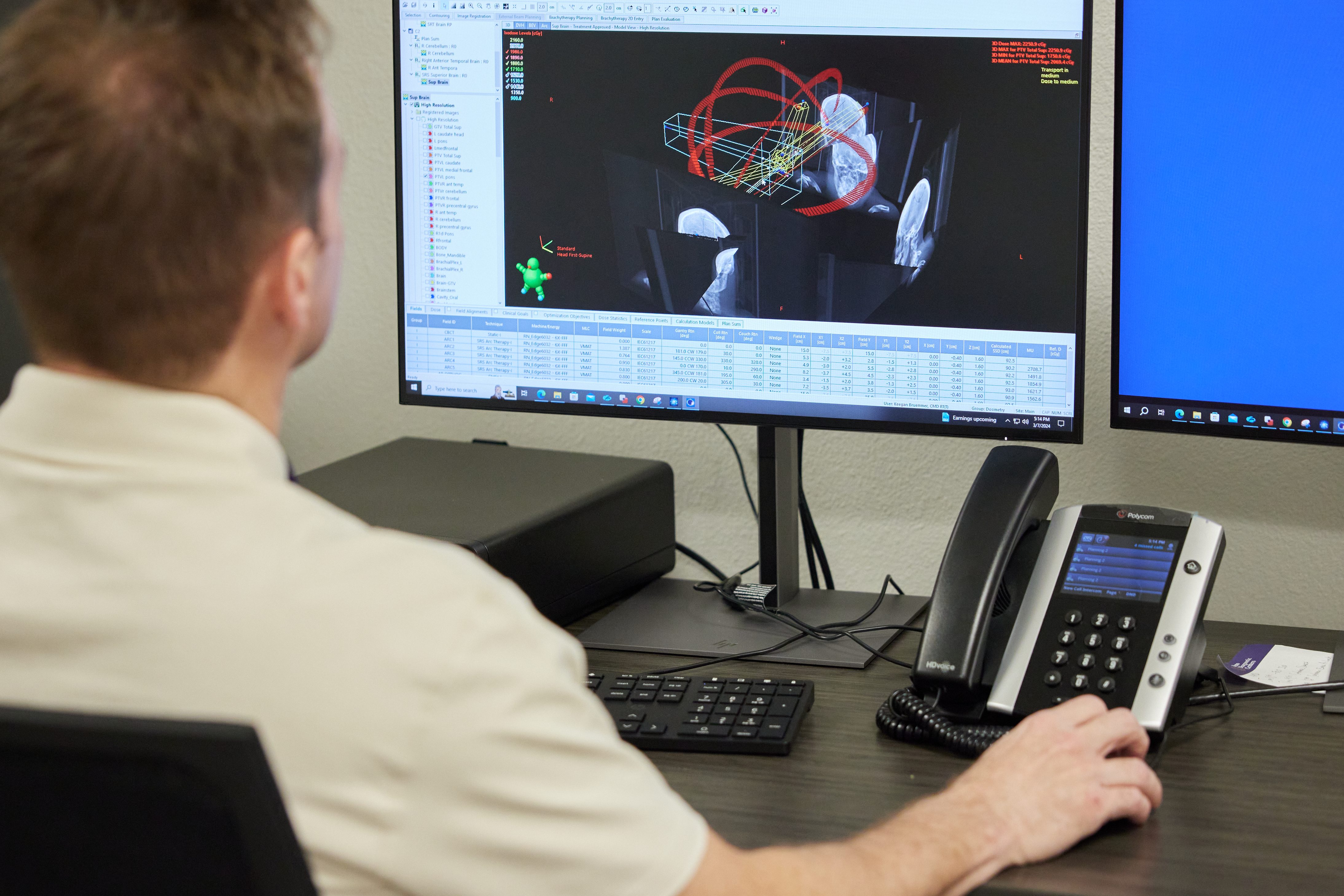
However, sometimes we want to deliver very high doses to a small cancer volume and then drop the dose quickly to spare the organs nearby. This concept of “radiosurgery” has been called stereotactic radiosurgery (SRS) in the brain; stereotactic body radiotherapy (SBRT) or stereotactic ablative radiotherapy (SABR) in the rest of the body. Machines that can perform radiosurgery have much more stringent requirements for patient immobilization, imaging and monitoring capabilities, smaller and more controlled apertures for the radiation to be shaped through, and requires expertise from your whole radiation treatment team.
 Reno Cancer Center