
Brachytherapy is a special procedure most commonly used for treating cervical cancer, endometrial cancer, and prostate cancer. By placing a radioactive element into or near the tumor, high doses of radiation can be delivered to destroy the tumor. Radiation dose falls off exponentially with distance from the source (see graph below for Iridium-192), so the nearby rectum and bladder receive relatively little dose.

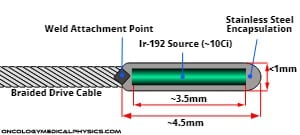
Patients used to be hospitalized in shielded rooms while the implant was left in place, sometimes for days, and then removed after the appropriate dose had been delivered by the radioactive element. This is referred to as low-dose rate radiation. Most brachytherapy in the United States is now done with a remote afterloader and a high dose rate element like Ir-192. Ir-192 emits radiation faster than naturally occuring radioactive elements, so treatments are usually 5-15 minutes. It is also denser, allowing it to be welded to the end of a wire that is controlled electronically by a computer to move the Ir-192 to different dwell positions along the implant device catheters.
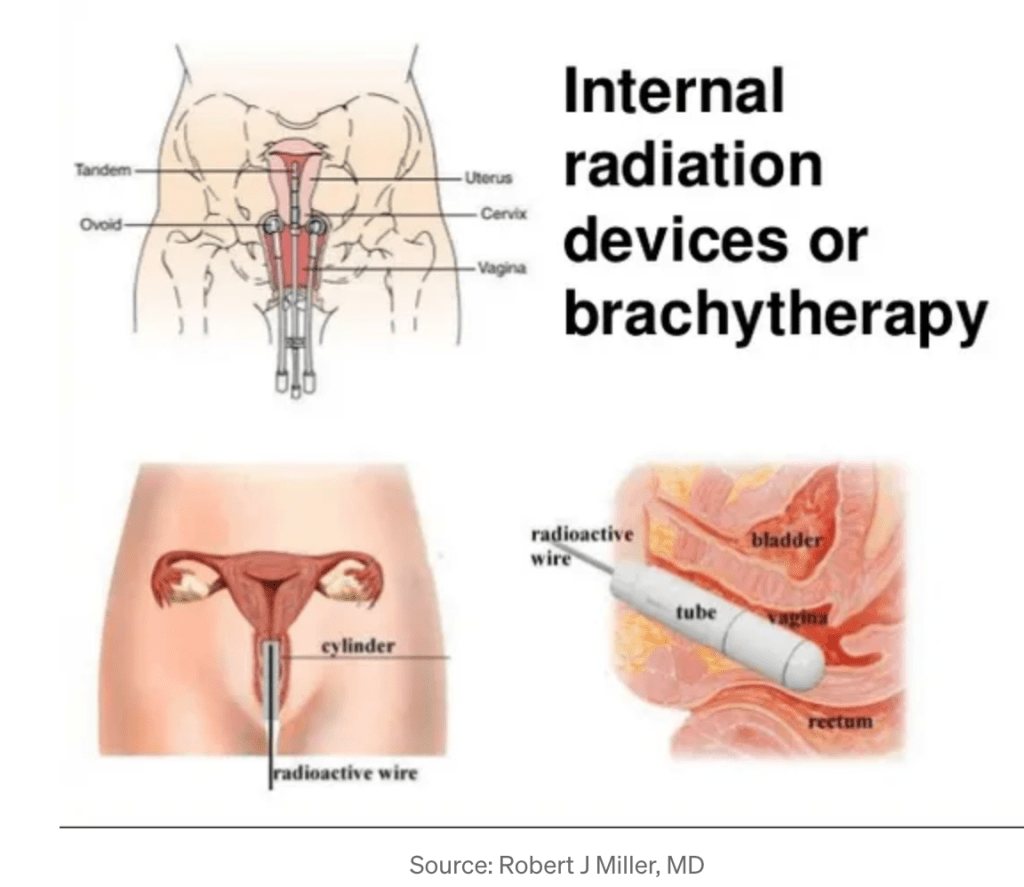
Our clinic mostly treats cervical cancer and endometrial cancer patients. The diagram above shows how metal/plastic devices are inserted by your doctor into the vagina to be touching the treatment areas. The cylinder device insertion for endometrial cancer is usually painless. There may be some discomfort with the deeper device insertions for cervical cancer, but this can usually be managed without anesthesia in the office.
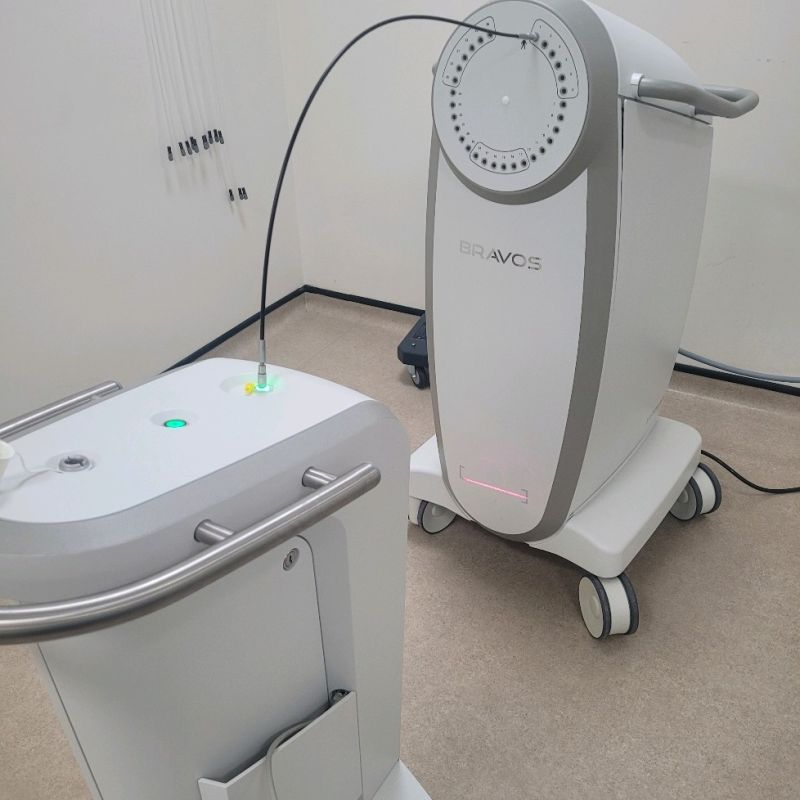
Once the doctor has placed the implant, the patient is moved to a vault with the brachytherapy afterloader. The Varian Braavos is the newest edition and allows complex treatments. The implant is attached to the afterloader with plastic tubing for the radioactive wire to travel through. After that, the machine is programmed to go through each channel, dwelling the appropriate time at each position to deliver the prescribed dose of radiation. Afterwards, the device is disconnected and the implant removed.
 Reno Cancer Center