
5 weeks vs 3 weeks of radiation
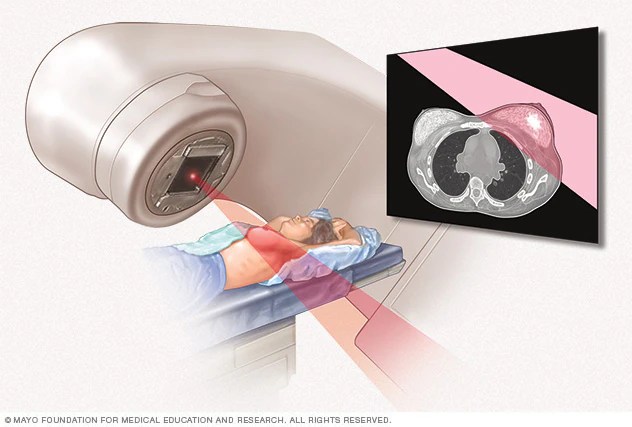
At the turn of the century, trialists began comparing hypofractionation (slightly more dose per day, shorter overall treatment) with conventional fractionation. Technology allowed higher energy beams to be used to spare skin toxicity, and CT scans were common now to plan the radiation to avoid the underlying heart and lung. Not only was there no difference in breast cancer cure rate, the cosmetic outcomes were better with the hypofractionation. Hypofractionation is now standard of care in the US.

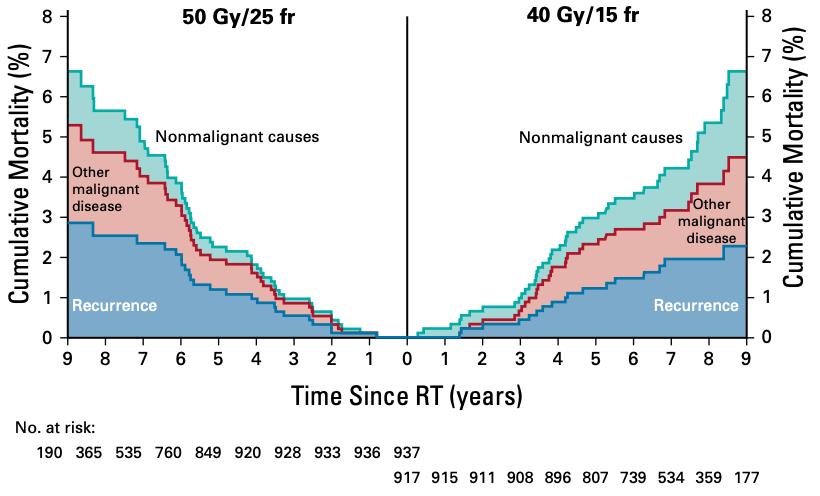
Even in the setting of treating regional lymph nodes, 2024 conference abstracts from ESMO and ASTRO are showing decreased lymphedema and equivalent tumor control with 3 weeks of treatment. For women with implant-based reconstruction after mastectomy, the early results of FABREC and RT-CHARM trials support a 3 week course of radiation. The 2-year implant complication rate was 14% with 3 weeks of radiation vs 12% with 5 weeks of radiation; however, that difference increased in women who receive a tissue expander and delayed reconstruction (27% vs 20%). Long term follow up will be important to review.
What about one week of treatment?
The UK FAST trial compared once weekly radiation for five weeks to a total dose of 28.5Gy vs conventional fractionation to 50Gy. With 10 years of follow up, there was no difference in breast cancer control rate (>98%). The chance of having wet peeling skin went down from 12% to 3%, but there was a minimally higher chance of breast swelling 1.3% vs 0.7%.
For patients that don’t live far from a radiation center and want to finish within one week, the UK FAST-FORWARD trial compressed 26Gy into five daily treatments over a week and compared it to standard hypofractionation to 40Gy in three weeks. Again there was 98% tumor control at 5 years follow up, and no detectable differences in side effects. In the UK, the five treatment schedule has become their standard of care. While it is very promising and I have offered it to certain patients, our US national guidelines still prefer the standard 3 week option until we see more published long-term experiences from the UK.
 Reno Cancer Center