
Mastectomy vs Breast Preservation
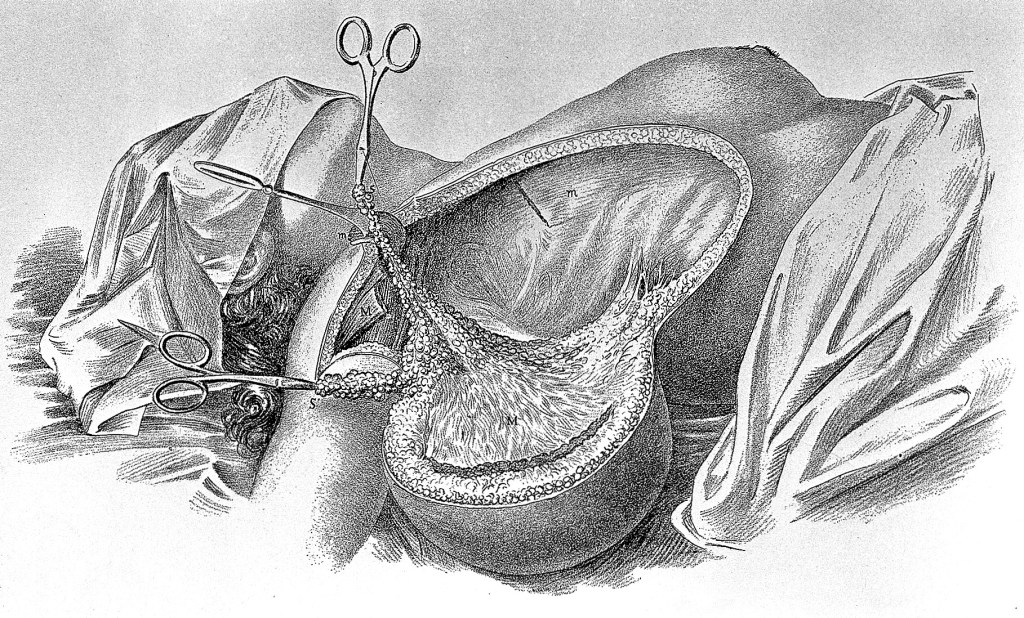
Breast cancer is the most common cancer affecting women and probably the most studied cancer ever. For those interested in history, this article outlines the evolution of surgical treatments, dating back to the time of the Egyptians. William Halsted trained a generation of surgeons in the 1900s to perform radical mastectomies to cure breast cancer, but often with residual chest wall pain and disfigurement.
As radiation technology improved, surgeons began to experiment with less invasive surgeries. In the 1970s, NSABP B04 showed a total mastectomy (no removal of the pec muscle) with 2D supervoltage radiation had the same survival rate as total mastectomy or radical mastectomy. Radiation was dosed 50Gy in 25 daily treatments over 5 weeks and used lower energy X rays compared to modern machines (resulting in more skin redness). There were no 3D CT scans or beam shaping to guide the treatment and avoid the underlying lung and heart. This was stone age radiation!
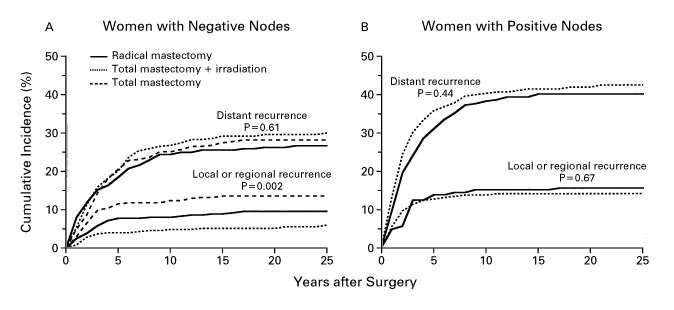
The next step was to compare total mastectomy to a lumpectomy, analagous to just removing the visible dandelion from a garden without gutting the whole thing. NSABP B06 showed this could only be safely done if radiation was given after.

Subsequent trials were run and a meta-analysis combining the results showed radiation reduces the chance of breast cancer recurrence at 10 years by half. For every four breast cancer recurrences prevented at 10 years, one death from breast cancer was prevented at 15 years. The lumpectomy followed by radiation has become the most common treatment for early stage breast cancer today. Mastectomy is still an option, with reconstruction techniques continuing to improve. I’ve seen younger women choose this more often, to avoid the possible side effects of radiation. However, some patients who choose mastectomy may still benefit from radiation afterwards, especially if there was spread to the lymph nodes. Each patient should discuss their specific situation and preferences with her doctors to make the best decision for her.
 Reno Cancer Center